Wideband FPC Antenna: Measured Gain, Efficiency & Specs
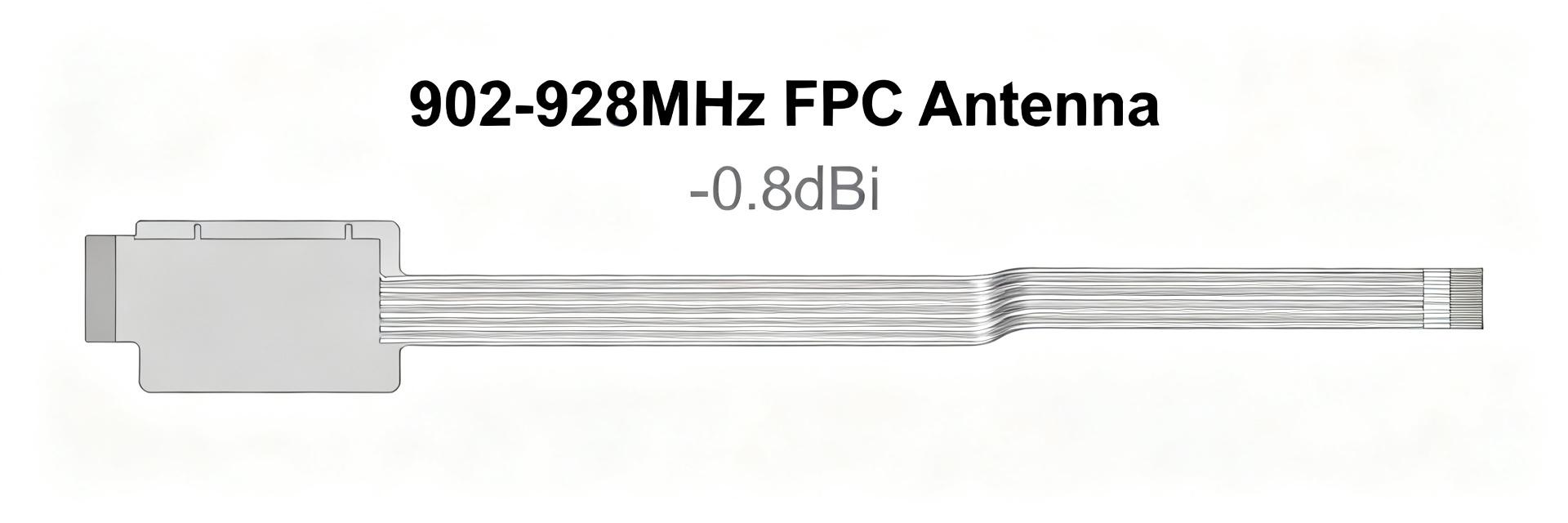
Point: Wideband FPC antenna samples commonly show peak gains in the ~3–7 dBi range and radiation efficiency of ~60–90% across 600 MHz–6 GHz. Evidence: Multiple lab campaigns report these banded ranges for printed flexible-circuit antennas. Explanation: Knowing realistic measured ranges avoids optimistic selection and costly field rework. FEED Radiating Element (600MHz - 6GHz) Polyimide Substrate / Flexible PCB RF Trace Frequency Band Measured Gain (Peak) Radiation Efficiency 600 - 960 MHz (Low) 1.5 - 3.2 dBi 60% - 72% 1710 - 2690 MHz (Mid) 3.5 - 5.8 dBi 70% - 85% 3300 - 5000 MHz (Sub-6) 4.2 - 7.0 dBi 75% - 90% 5150 - 5850 MHz (WiFi) 3.8 - 6.5 dBi 65% - 82% Why a Wideband FPC Antenna Matters 1.1 Market & application snapshot Primary US applications include cellular IoT, M2M telemetry, and industrial wireless where a single SKU reduces inventory. FPCs trade slightly lower peak gain for form-factor flexibility and simplified BOM management compared to rigid ceramic alternatives. 1.2 Key performance metrics to watch Core metrics include measured gain (dBi), radiation efficiency (%), return loss, and bandwidth. Designers must balance peak gain against average because a 3–4 dB null at an operating band can dominate link reliability. Measured Gain: Lab Results & Interpretation 2.1 Typical measured gain profiles Typical wideband FPCs show several peaks (3–7 dBi) and troughs up to 3 dB deep across 700 MHz–3.5 GHz. Plot-ready guidance includes marking ±1σ tolerances and noting measurement conditions such as ground plane size and antenna orientation. 2.2 Interpreting gain for real-world performance Gain change ΔG (dB) maps directly to link margin; +3 dB gain yields ~2× received power. Quick estimate: required additional range ≈ 10^(ΔG/20). Using Friis-based math helps show SNR improvements or required transmit power reductions. Efficiency & Radiation Performance 3.1 Measurement methodology Radiation efficiency differs from total system efficiency and is reported as a percent over frequency. Common methods include anechoic-chamber full-pattern integration and Wheeler-cap approximations. Always verify if feed and cable losses are included. 3.2 Typical efficiency ranges Wideband FPCs typically show 60–90% efficiency. Losses stem from substrate dielectric loss, small ground planes, and nearby metallic materials. Mitigation involves ensuring adequate ground plane clearance and optimizing matching networks. Test Setup & Best Practices Reproducible lab setup requires VNA and chamber settings with calibrated cables. Perform full two-port SOLT or TRL calibrations. Typical errors include ground-plane edge effects and orientation faults; detect these by repeat runs and checking S11 consistency. Spec Sheet Deep-Dive & Procurement Evaluate frequency range, peak/average gain, and VSWR. Red Flags: Beware vague specs like "gain up to X dBi" without test conditions. Require calibrated chamber reports and raw S-parameters before acceptance to prevent later mismatches. Key Takeaways Expect typical wideband FPC peaks around 3–7 dBi and efficiencies near 60–90%. Insist on calibrated chamber reports and explicit ground plane test conditions. Use selection thresholds (min avg gain, min efficiency %) to reduce field risk. FAQ How does measured gain affect my device range for a Wideband FPC antenna? Measured gain directly enters the link budget: a 3 dB increase roughly doubles received power, improving range or reducing transmit power. Use Friis equation examples to convert dBi changes to realistic range estimates. What efficiency figures should I demand when validating measured efficiency? Require band-swept radiation efficiency reported as percent; a practical minimum is 60–70% for compact wideband FPCs. Ensure reports detail whether connector and feed losses are excluded or included. What are minimal test deliverables I should require for procurement? Request calibrated chamber reports, raw S-parameters, full 3D pattern files across target bands, photos of the test setup, and at least one field-validation report for independent verification. Why is ground plane size critical for FPC measurements? FPC antennas utilize the PCB ground as part of the radiating structure; changing its size shifts resonance and gain profiles significantly. Spec sheets must state the ground plane size used during testing. Conclusion: Measured gain and efficiency determine link margin and power consumption. Rigorous measurement and clear spec thresholds prevent costly field failures. Next step: specify numeric acceptance thresholds in procurement RFQs.